Natural Relief for Digestive Disorders: A Root-Cause Approach
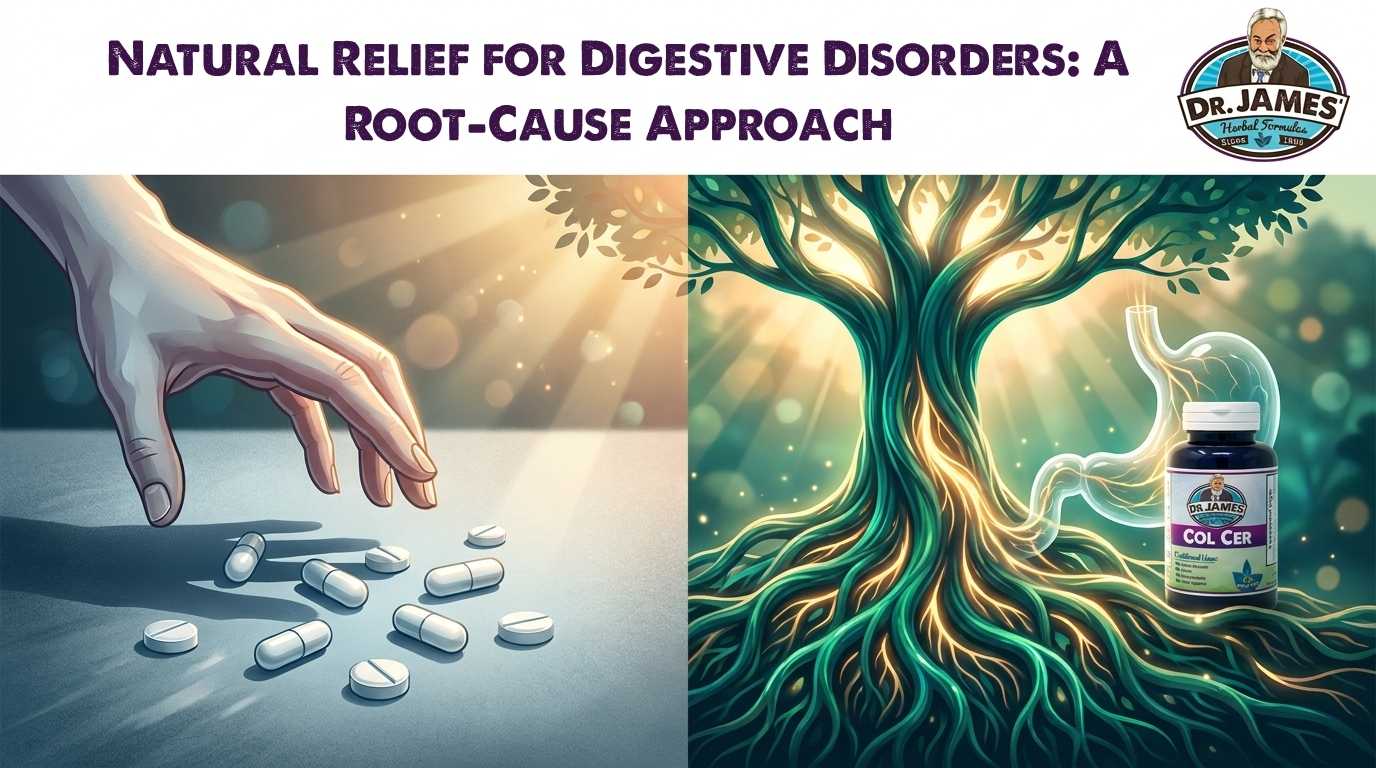
Most digestive relief on the shelf is built to do one thing: quiet the symptom and move on. Antacid for the burning, a laxative for the backup, a pill for the gas. But after more than forty years of working with people's digestive health, I can tell you that masking a symptom is not the same as fixing the problem — and the problem almost always lives deeper than where the discomfort shows up. A root-cause approach to digestive disorders works the other way around: it asks why the gut stopped working and rebuilds it, so the symptoms have no reason to come back. In this article I'll show you what that looks like, the warning signs of poor digestion, and the practical path — diet first, then whole-plant herbs — to repair the system naturally.

What a Root-Cause Approach Actually Means
A root-cause approach to digestive disorders focuses on identifying and correcting the underlying reasons the gut is struggling — food choices, microbiome imbalance, chronic stress, poor digestion, and nutrient depletion — rather than just covering up the symptoms. Instead of one drug per complaint, it uses diet, simple lifestyle changes, and targeted whole-plant herbs to restore long-term gut health.
This isn't a new idea dressed up in modern words. It's the oldest idea in natural therapy: you don't treat the disease, you nourish the system until the body heals itself. A "digestive disorder" — the bloating, the reflux, the irregularity, the discomfort — is usually the visible sign that one part of the digestive system has been overwhelmed or starved. Feed and support that system properly and the body does what it was built to do. (This whole-system thinking runs through everything we do — see The Reality of Herbal Therapy.)
The Signs Your Digestion Is Struggling
Before the path forward, it helps to recognize the symptoms of poor digestion. These are the signals that the system needs support, not just silencing:
-
Bloating, gas, and belching after meals
-
Heartburn, reflux, or that heavy, stuck feeling
-
Irregularity — constipation, or bowels that don't move on their own
-
Brain fog and fatigue after eating, especially after heavy or processed meals
-
Skin flare-ups, which often trace back to a gut pushing toxins out through the skin
-
Cravings for sugar and white, starchy food
-
Food sensitivities that seem to multiply over time
If several of these sound familiar, the goal isn't to treat each one separately. It's to find and fix what they share.
The Key Pillars of Repairing Digestion Naturally
Here's how I think about rebuilding a struggling digestive system, in order.
1. Individualized nutrition — take out what's breaking it down
The first move is removing the foods doing the damage. For most people that's ultra-processed food and the "white stuff" — white sugar, white flour, white rice. They strip out fiber, feed Candida overgrowth, and deplete the very microbes that digest your food. Some people also need to step back from specific trigger foods for a while to let the gut calm down. Color means nutrients; white means empty. (For why Candida thrives on this and how to rebalance it, see our article on Candida.)
2. Combine food so it can actually digest
You can eat perfect food and still struggle if you combine it wrong. The single most useful rule: don't eat concentrated protein and starch in the same meal. Protein needs a strongly acidic stomach environment; starch needs a near-neutral one. Put them together and they fight, digestion stalls, and food that lingers turns from nutrient into toxin. This one change resolves the majority of everyday digestive complaints. (Full breakdown in our food-combining guide.)
3. Repair the gut lining and the microbiome
Once you stop the damage, you rebuild. The intestinal lining is where a great deal of digestion and absorption happens, and it's where ulcers and inflammation start when it's worn down. Whole-plant herbs that soothe and support that lining — paired with the minerals the body needs to maintain a proper stomach pH — give the system its materials back. This is also where you reintroduce good cultures from real food: live-culture yogurt, kefir, sauerkraut.
4. Optimize digestion itself
A lot of "weak digestion" is simply not enough digestive power to break food down completely. Traditional herbalists have always used bitter herbs — dandelion, gentian — and mineral-rich digestive plants to support the stomach's own ability to break food down, so that what reaches the colon is ready to be absorbed rather than left to ferment and putrefy.
5. Keep things moving
None of the above works if waste isn't leaving. A normal gut speaks up about thirty minutes after a meal. If you're backed up, fiber and gentle support get the tract moving so the body can clear what it's pulling out.
The Whole-Plant Formulas That Support Each Pillar
Diet does most of the work — but the right formulas give a depleted system the materials to rebuild. Here's how each one maps to the pillars above.
COL CER is the one I reach for first for almost any digestive complaint. It soothes and supports the entire tract — as I like to say, from the lipstick to the toilet paper. It supports the stomach lining where ulcers start, helps release waste stuck in the folds of the colon, and gives the gut the nutrients it needs to function. (Pillar 3.)
ZIME supports the stomach when food isn't breaking down correctly — fermentation, that heavy stuck feeling, incomplete digestion. Taken before a meal you know will be hard to digest, it helps set the right environment from the start. It's also rich in green, mineral-dense plants, which helps people who don't eat their vegetables well. (Pillar 4.)
KOLONIC KAPS is the fiber formula that sweeps out the corners — psyllium husk to move things along, plus apple and grapefruit fiber that absorb toxins and dead material, and diatomaceous earth, which supports a clean colon. (Pillar 5.)
FECTION supports the body against harmful microbes while letting the good ones flourish — unlike an antibiotic, which kills indiscriminately. Useful when the gut biome itself is off. (Pillars 1 and 3.)
LIV CLEAN supports the liver, the body's filter. A liver constantly working through processed food gets overwhelmed, and a backed-up liver lets toxins build up everywhere. (Pillar 3.)
KLEAN LAX is a laxative for when things truly won't move — used carefully. It's not addictive, but it's not a daily crutch. Start at one capsule and build only to the effect you need; with this one, more can be something you regret. (Pillar 5.)
PM Minerals+ supplies the minerals the body uses to regulate stomach pH and rebuild the gut biome — the foundation the whole system rests on.
When the emotional side is in the picture too — the gut makes about 90% of your serotonin — supporting digestion often clears more than just the stomach. (See our guide to the gut-brain connection.)
What To Drink and Do Around Meals
A few practical habits people ask about constantly:
-
What to drink after a meal to help digestion: a warm herbal tea — catnip and fennel is a gentle, traditional digestive blend — or warm water. Cold drinks and large volumes of liquid during the meal can dilute the stomach's digestive power; sip rather than gulp.
-
When you've eaten too much: don't lie down. A gentle walk helps move things along, warmth on the belly is soothing, and a digestive-support herb like ZIME helps the stomach catch up. Time and patience do the rest — the heavy, foggy feeling is the cost of the overload.
-
Daily care for your digestive system: eat whole, colorful food; combine it well; chew thoroughly (digestion starts in the mouth); move your body; manage stress, which the stomach holds; and keep the good cultures coming from real fermented food.
Frequently Asked Questions
What is the best natural remedy for digestive problems?
There's no single remedy, because lasting relief comes from addressing the root cause rather than one symptom. The most effective natural approach combines removing ultra-processed and "white" foods, combining food properly so it can digest, restoring good gut cultures through whole fermented foods, and supporting the gut with whole-plant herbs that soothe the digestive lining and aid digestion. Diet does roughly 80% of the work; herbs support the rest.
How do you heal the gut naturally — and what are the main ways to do it?
Healing the gut naturally comes down to a handful of steps: remove the foods damaging it (ultra-processed food, refined sugar, white flour); combine food properly so it digests cleanly; restore good cultures with real fermented foods like sauerkraut, kefir, and live yogurt; support the intestinal lining and supply the minerals the gut needs; keep the bowels moving with fiber; and manage stress, which is held in the stomach. Whole-plant herbs that soothe and nourish the tract support each of these steps.
How do you repair the digestive system naturally?
You repair the digestive system by stopping the damage and then rebuilding. Take out processed and refined foods, eat whole foods combined properly, reintroduce good microbes from fermented foods, and give the gut lining the nutrients and minerals it needs to rebuild. Support digestion itself with traditional bitter and mineral-rich herbs, and keep waste moving so the body can clear what it's eliminating. It takes consistency over weeks, not a single dose.
Which herbal medicine is used most often to treat stomach disorders?
Traditional herbalists most often reach for soothing, mucilaginous herbs like slippery elm and marshmallow to support the stomach and intestinal lining, bitter herbs like dandelion and gentian to support digestion, and calming carminative herbs like fennel, peppermint, and catnip for gas and cramping. Rather than isolating a single compound, whole-plant herbalism uses these in their complete form to nourish the digestive system. Within Dr. James' line, COL CER and ZIME are the most commonly used digestive formulas.
What can I drink after a meal to help digestion?
A warm herbal tea such as catnip and fennel, or simply warm water. Avoid large amounts of cold liquid with meals, which can dilute the stomach's digestive power. Sipping warm liquid supports digestion rather than working against it.
Start at the Root, Not the Symptom
Digestive disorders aren't a life sentence and they're rarely a mystery. They're the body telling you a system has been overwhelmed or under-fed. Stop masking the signal, take out what's breaking the gut down, rebuild it with real food and whole-plant support, and give it an honest stretch of time. The discomfort fades when the cause is gone.
If you'd like help choosing or dosing a formula, or you want the deeper picture of how every body system connects, The Reality of Herbal Therapy lays it all out. Order the book, ask a question, or get formula guidance at drugfreehelpstore.com or call 888-388-4413.
Dr. Michael E. James, C.H., M.H., NMD, is a clinical herbalist and the founder of Professional Herbal Instruction and Dr. James' Herbal Formulas. For more than forty years he has helped people restore health by nourishing the body's own systems with whole-plant herbal therapy. drugfreehelpstore.com · 888-388-4413
This content is offered for educational purposes from the herbalist's point of view only. It is not intended to diagnose, treat, cure, prevent any disease, or replace care from a licensed professional. Consult your doctor regarding your own health.