Lugol's Iodine vs. Pharmacy Iodine: What's the Difference and Why It Matters for Your Health

Most people have a brown bottle of iodine somewhere in the medicine cabinet. You grab it when you cut yourself. You put it on a scrape. You've probably had it there for years.
Then someone mentions Lugol's iodine, and suddenly there's a question you didn't know you needed to answer: Is that the same thing?
It is not. And the difference matters more than most people realize.
What Is Lugol's Iodine?
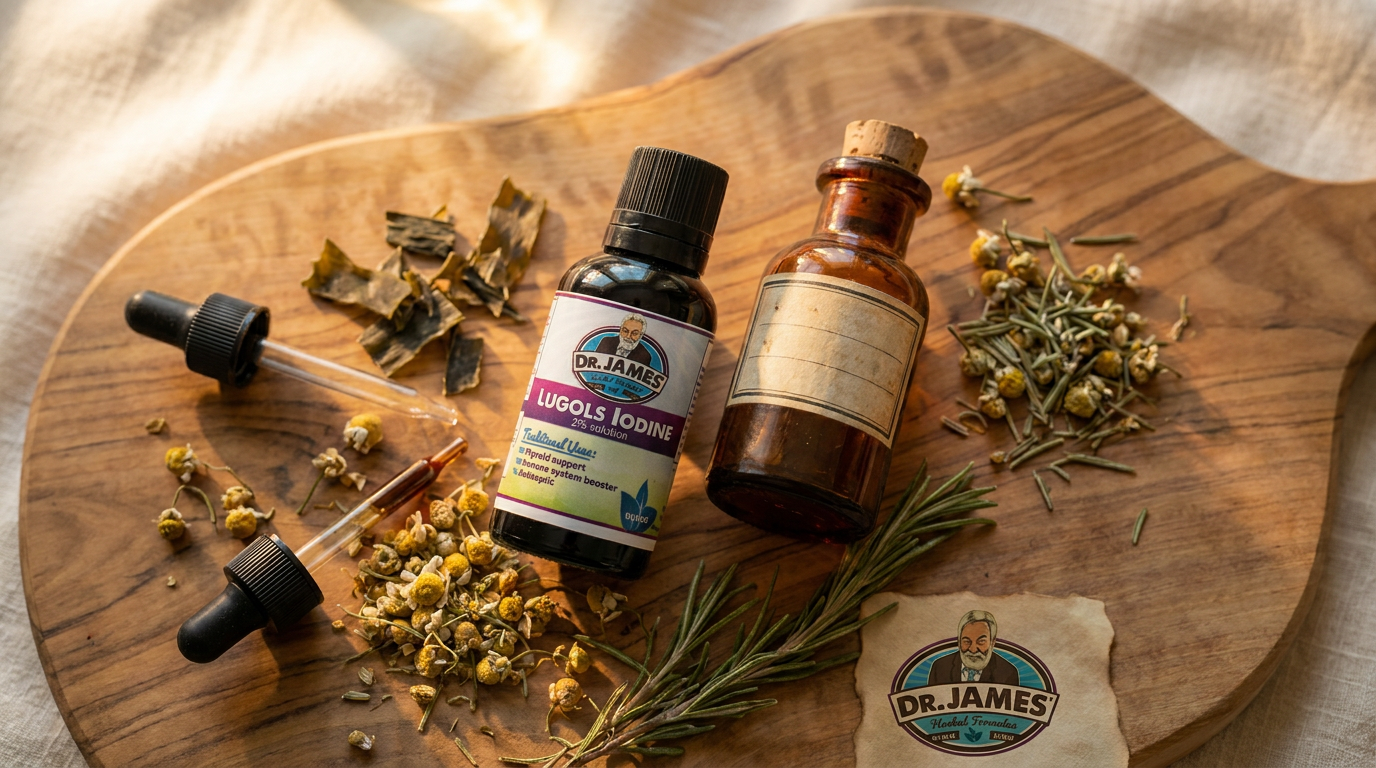
Lugol's iodine is a water-based solution combining two forms of iodine — elemental iodine and potassium iodide — formulated specifically for internal use and systemic absorption.
It was developed in 1829 by French physician Jean Guillaume Auguste Lugol and has been used clinically for nearly two centuries. The combination of elemental iodine and potassium iodide is not accidental — it is what makes Lugol's bioavailable in the human body in a way that neither form could achieve on its own.
A therapeutic serving of Lugol's iodine typically supplies both forms. The formulation used clinically by Dr. Michael E. James, CH, MH, NMD, for example, provides potassium iodide and elemental iodine in a specific ratio designed to support the body's needs at both the digestive and systemic levels.
What Is Pharmacy Iodine (Tincture of Iodine)?
Tincture of iodine is elemental iodine dissolved in alcohol, formulated exclusively as a topical antiseptic for use on the skin.
The standard pharmacy formulation is typically a 2% iodine solution in an alcohol base. It is effective at killing bacteria and fungi on the surface of wounds, cuts, and abrasions — which is exactly what it was designed to do.
It was not designed to be swallowed. The alcohol carrier makes it unsuitable for internal use, and elemental iodine on its own — without the potassium iodide that Lugol's contains — is poorly absorbed by the body even when ingested in a food-safe form.
The Core Difference: Bioavailability
Here is where the clinical distinction becomes critical.
Elemental iodine, on its own, is a metallic mineral. In that form, it is nearly impossible for the human body to absorb. This is why tincture of iodine stays on the skin — it works topically, but the body cannot meaningfully assimilate bare elemental iodine into the bloodstream, thyroid, or tissues.
Lugol's solves this problem by combining elemental iodine with potassium iodide. The potassium iodide acts as a carrier, making the elemental iodine water-soluble and bioavailable. This is the critical formulation insight that separates a therapeutic iodine supplement from a first-aid antiseptic.
Additionally, the pH of the digestive tract plays a role in how well even Lugol's iodine is absorbed. Acidic beverages like orange juice or Tea Honey (apple cider vinegar and raw honey) support the proper digestive pH for optimal iodine assimilation.
Comparison: Lugol's Iodine vs. Tincture of Iodine
| Feature | Lugol's Iodine | Pharmacy Tincture of Iodine |
|---|---|---|
| Formulation | Elemental iodine + potassium iodide in water | Elemental iodine in alcohol |
| Intended use | Internal (oral) and topical | Topical only |
| Bioavailability | High — potassium iodide enables systemic absorption | Poor — elemental iodine alone is not absorbable |
| Thyroid support | Yes — feeds thyroid iodine directly | No |
| Gut antimicrobial action | Yes — elemental iodine attaches to gut mucous | Limited to skin application only |
| Safe to ingest | Yes, at appropriate doses | No — alcohol base is not safe to swallow |
| Typical concentration | Variable (2%, 5%, 7%) — check label | Typically 2% iodine in 47–70% alcohol |
What Lugol's Iodine Actually Does in the Body
Thyroid Function and Immune Defense
The thyroid gland is, among other things, one of the body's primary immune defense stations. Every 11 minutes, all the blood in the body passes through the thyroid. When sufficient iodine is present, the thyroid uses it to weaken or kill harmful germs, bacteria, and viruses in the bloodstream on every pass.
When iodine is absent, that process stops. The thyroid cannot perform this immune function without adequate iodine. This is not a fringe theory — it is the documented physiological mechanism that makes iodine one of the most important trace minerals for overall health and disease resistance.
In much of inland America — particularly the Southwest — iodine is not naturally present in the soil. That means it is not in the food grown in that soil, regardless of how nutritious that food would otherwise be. People living in these regions are at particular risk for iodine insufficiency without supplementation.
Gut Antimicrobial Action
Elemental iodine has a distinctive chemical property: it attaches itself to almost anything it contacts. In the digestive tract, this means the elemental iodine in Lugol's binds to mucous in the stomach rather than rushing into the bloodstream. This makes it particularly effective at targeting dangerous gut bacteria like Salmonella and Shigella.
Salmonella and Shigella are two bacterial parasites that cause significant digestive misery — bloating, gas, digestive upset — often misdiagnosed as lactose intolerance or dismissed as a "24-hour flu." Chronic low-level infection with these bacteria is more common than most people realize, and Lugol's iodine used with Tea Honey is one of the most effective natural approaches for addressing them at the source.
Halogen Competition — The Hidden Iodine Thief
One of the most overlooked factors in iodine deficiency is halogen displacement. Iodine belongs to a chemical family called halogens. Other halogens — fluorine (fluoride), chlorine (found in municipal water), and bromine (found in spas, swimming pools, and commercial white flour) — compete directly with iodine in the body.
When any of these halogens are present, they push iodine out of its receptor sites and render it useless. The body cannot distinguish between halogens at the cellular level — whichever one shows up wins the receptor. For most people drinking fluoridated, chlorinated tap water and eating commercially produced bread, iodine displacement is a daily, ongoing problem.
This is one reason why supplementing with a bioavailable form like Lugol's iodine — rather than relying on dietary iodine alone — makes practical sense for many people.
Weight Management Support
When used with Tea Honey, iodine supports weight management through two pathways: by improving nutrient absorption (which reduces cravings driven by nutritional deficiency), and by helping pull stored fats from tissues into the bloodstream where they can be burned for energy. Both mechanisms are supported by optimal thyroid function, which depends on adequate iodine.
Iodine Allergy Testing and Deficiency Assessment: The Wrist Patch Test
Before taking Lugol's iodine internally, there is a simple, time-tested method for determining two important things at once: whether you have an iodine sensitivity, and how iodine-deficient your body currently is.
The test is straightforward. Place one drop of Lugol's iodine on the inside of your wrist. Let it dry. Do not wash it off.
Testing for Iodine Allergy
If a rash, significant redness, or notable skin irritation develops at the application site, this indicates an iodine sensitivity or allergy. In this case, internal use of Lugol's iodine is not recommended, and you should consult a qualified health professional before proceeding.
Most people do not have an iodine allergy, but the wrist test is a responsible first step — particularly for anyone with known sensitivities to shellfish or topical antiseptics, as these can sometimes correlate with iodine sensitivity.
Measuring Iodine Deficiency by Absorption Rate
The same patch test doubles as a surprisingly accurate window into how iodine-deficient your body is — and the mechanism is elegantly simple.
When the body is iodine-deficient, it is actively hungry for iodine. Tissues that are depleted will absorb available iodine rapidly through the skin. The more deficient you are, the faster the iodine stain on your wrist disappears.
Here is how to read the result:
- Iodine fades within 1–2 hours — significant iodine deficiency is likely. The body is pulling the iodine in quickly because its reserves are low.
- Iodine fades within 4–6 hours — moderate deficiency. The body is absorbing it, but not at a depleted rate.
- Iodine stain remains visible for 8–12 hours or longer — iodine levels are relatively adequate. The body has less urgency to absorb more.
This test does not replace clinical evaluation, but it gives you a meaningful, practical signal about where your body stands — and whether consistent supplementation is something your body is clearly calling for.
For those who test and find rapid absorption, starting with Lugol's iodine daily in Tea Honey and retesting weekly will show measurable progress as tissue levels begin to normalize. As deficiency resolves, the absorption rate will slow — the patch will stay visible longer. That is the body telling you it has what it needs.
How Much Lugol's Iodine Is Appropriate?
A typical daily therapeutic dose is 3 drops, though some individuals respond well to up to 6 drops per day. Iodine is a trace mineral, and as with all trace minerals, there is a range where the body thrives — and a point above which symptoms can indicate you are approaching your personal upper limit.
The signals to watch for: unexplained skin rashes or a persistent runny nose. These are the body's early indicators that iodine levels are approaching the upper end of your individual tolerance. If either occurs, stop for a day or until symptoms resolve, then resume at half your previous dose. Over time, your proper personal dose will become clear.
It is best taken in a beverage that supports absorption — Tea Honey (apple cider vinegar and raw honey in water) or orange juice create the correct acidic digestive environment for optimal assimilation.
Can You Use Pharmacy Iodine as a Substitute for Lugol's?
No. This is not a matter of preference or brand — it is a matter of formulation and safety.
Pharmacy tincture of iodine contains alcohol, which is not safe to ingest. Beyond the alcohol, the elemental iodine in tincture of iodine is not paired with potassium iodide, so it would not be absorbed systemically even if the alcohol were removed from the equation. It would simply stain your mucous and provide no thyroid or immune benefit.
If Lugol's iodine is what you are looking for, tincture of iodine is not a substitute in any meaningful clinical or nutritional sense.
Frequently Asked Questions
What is the difference between Lugol's iodine and regular iodine? Regular pharmacy iodine (tincture of iodine) contains elemental iodine in alcohol and is designed for topical skin use only. Lugol's iodine combines elemental iodine with potassium iodide in water, making it bioavailable for internal use and capable of supporting thyroid function, immune defense, and gut health.
Is Lugol's iodine safe to drink? Yes, at appropriate doses. The standard therapeutic range is 3–6 drops per day taken in a beverage like Tea Honey or orange juice. It should not be confused with pharmacy tincture of iodine, which contains alcohol and is not safe to ingest.
Why is potassium iodide added to Lugol's iodine? Elemental iodine alone is nearly impossible for the body to absorb. Combining it with potassium iodide makes it water-soluble and bioavailable — allowing the iodine to reach the bloodstream, thyroid, and tissues where it performs its most important functions.
Does fluoride affect iodine? Yes. Fluoride, chlorine, and bromine are halogens in the same chemical family as iodine. When present in the body, they compete for iodine receptor sites and can displace iodine, rendering it ineffective. Most municipal water supplies contain both fluoride and chlorine, making this a relevant concern for many people.
How can I test for iodine allergy at home? Apply one drop of Lugol's iodine to the inside of your wrist and let it dry. If a rash or significant redness develops at the site, this indicates an iodine sensitivity, and internal use should be avoided. If no reaction occurs, the skin test is clear to proceed with internal supplementation at recommended doses.
How can I tell how iodine-deficient I am? The same wrist patch test that checks for allergy also reveals deficiency. If the iodine stain disappears within 1–2 hours, the body is absorbing it rapidly — a sign of significant iodine deficiency. If it fades within 4–6 hours, moderate deficiency is indicated. If the stain remains visible for 8–12 hours or longer, iodine levels are relatively adequate. Retest weekly as you supplement — the rate of absorption will slow as tissue levels normalize.
How do I know if I am iodine deficient? Iodine deficiency is particularly common in inland states where iodine is absent from the soil. Symptoms can include low energy, reduced immune function, thyroid irregularities, and weight management challenges. Because iodine is not reliably present in commercially grown food from iodine-depleted soil, supplementation with a bioavailable form is a practical step for many people.
The Bottom Line
Lugol's iodine and pharmacy tincture of iodine are not interchangeable. One is a formulated, bioavailable supplement designed to support thyroid function, immune defense, and gut health from the inside. The other is a topical antiseptic designed to disinfect wounds on the surface of skin.
If your goal is to support your thyroid, strengthen your immune system's daily bacterial filtration process, or address gut pathogens like Salmonella and Shigella — only Lugol's iodine, taken internally at an appropriate dose, will accomplish that.
The brown bottle in your medicine cabinet has its place. But it is not that place.
This article is for general educational purposes and is not intended to diagnose, treat, cure, or prevent any disease. The information provided reflects the clinical experience and educational framework of Dr. Michael E. James, CH, MH, NMD, as documented in his clinical writings. Consult a qualified health professional for personal guidance.
![[Podcast] Longevity, Herbs & Real-Life Stories: The Five Elements of Health](http://www.drugfreehelpstore.com/cdn/shop/articles/PODCAST_Longevity_5b33fe3a-6e17-44dd-bd4c-2a01d639327f.jpg?v=1779486308&width=1500)