Kidney Stones: What They Really Are, Why They Form, and How to Get Rid of Them
There's a joke about kidney stones and childbirth. Ask any woman which one she'd never want to repeat — and it isn't childbirth.
That's not an exaggeration. Anyone who has passed a kidney stone knows exactly why.
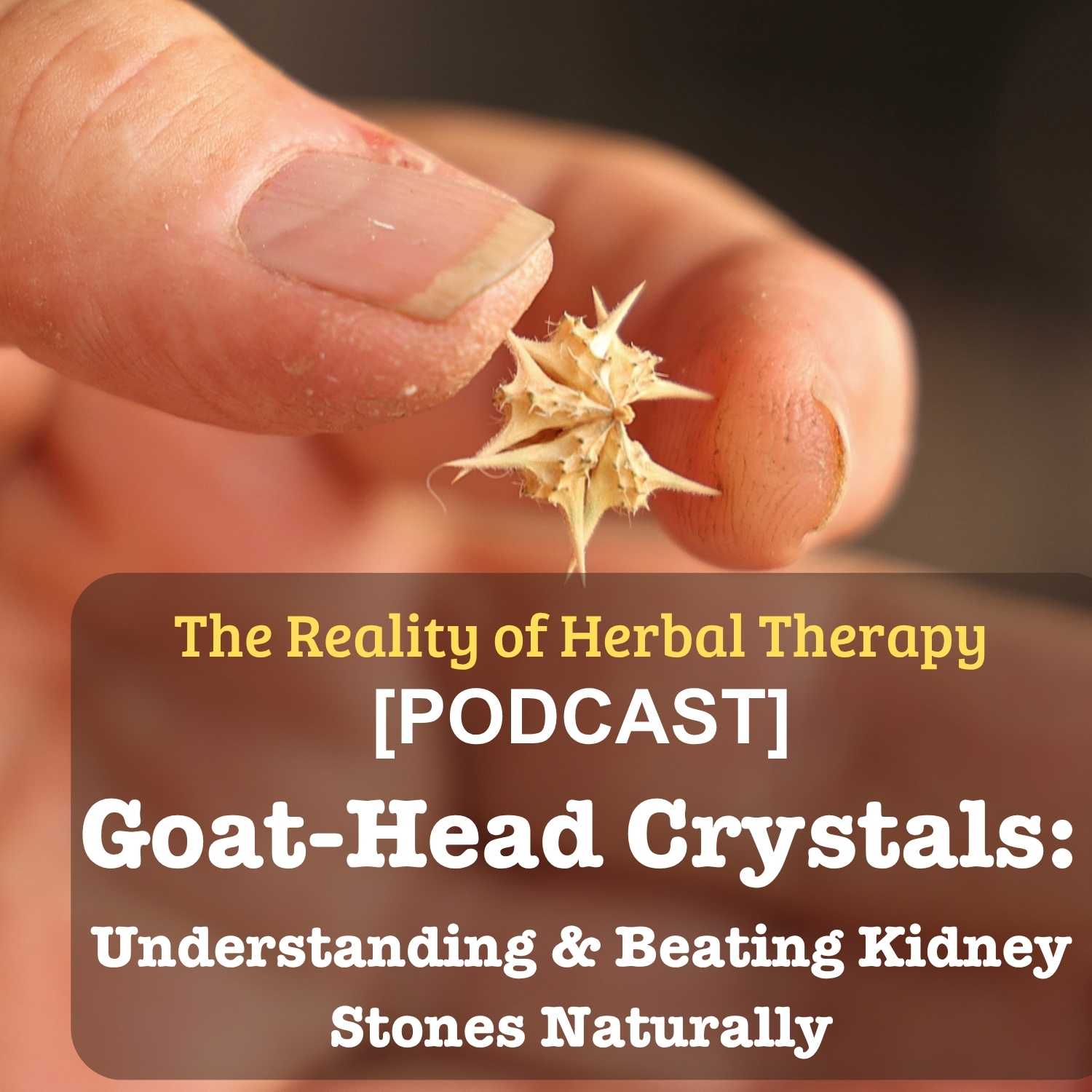
If you've never seen one up close, picture this: here in New Mexico we have a weed called a goat head. It's a tiny seed covered in sharp spikes that shoots straight through your foot the moment you step on it. The pain is instant, intense, and it doesn't come out easy.

That's what a kidney stone looks like. My sister kept one in a little bowl on her shelf — looked like a fossilized goat head. Dense. Spiked. Not smooth, not round — covered in crystalline points that rip and tear through everything they touch on the way out.
That is the thing working its way through your urinary tract when you have a kidney stone.
The medical answer — drink water and wait — is not wrong. But it isn't the whole picture. And it doesn't address why the stone formed in the first place, which means if you don't fix the environment, the stones keep coming back.
This article covers what kidney stones actually are, every major cause Dr. James identified from decades of clinical practice, the warning signs that tell you it's time to act, and the herbal protocol that clears them quickly — including the parsley tea story that stopped a stone cold in three hours.
What a Kidney Stone Actually Is
A kidney stone is not a smooth pebble. It is a hard mass of mineral crystals — most commonly calcium binding with oxalic acid or uric acid — that has accumulated in the kidneys over time.
Crystals are sharp by nature. When enough of them cluster together in concentrated urine and are given enough time to bind, they form a dense, spiked mass. That mass then has to travel from the kidneys through the ureters — narrow tubes not designed to accommodate it — and eventually out through the bladder and urethra.
Every spike pokes holes. Every inch of movement tears tissue. That is why the pain is what it is.
Kidney stones range enormously in size. At the small end, a stone may be no more than a grain of sand — and the person who passes it may never know it happened. My friend Dr. James and his wife Veronica once took in Lynn's grandmother, who had significant health issues. When they started her on Bladney, she began urinating what looked like sand. Those were the early-stage mineral deposits — the beginnings of kidney stones — being flushed out before they could grow. That is what you want: to catch it early, before the crystals bind into something that announces itself at full volume.
At the other end of the spectrum are stones large enough to lodge in the ureter — blocking the tube entirely, requiring sound wave treatment or surgery to break them up before they can pass. That is the situation nobody wants to be in.
Whatever form they come in, you don't want them. The question is what creates the environment in which they form — and what you can do to change it.
Why Kidney Stones Form: The Depleted System
Here is the insight that changes how you think about this:
Kidney stones don't form in a healthy, well-nourished urinary tract. They form in a depleted one.
The kidneys and bladder are extraordinary organs. They sit bathed in urine twenty-four hours a day — a fluid that would cause infection in virtually any other tissue in the body — and they keep filtering, keep processing, keep eliminating. When they are properly nourished, that system is remarkably resilient.
But when the urinary tract is chronically under-nourished — when the kidneys and bladder are not receiving the building blocks they need to maintain function — the system starts to lose its resilience. Minerals that a healthy kidney would process and pass through begin to concentrate. They sit. They crystallize. They bind.
By the time a kidney stone forms, the urinary tract has been undernourished for a long time. The stone is the symptom. The depletion is the problem.
That is why drinking water and waiting — while necessary — doesn't fix the underlying condition. And it is why people who get one kidney stone, treat only the stone, and return to the same diet and habits, tend to get another one.
The Causes: What Depletes the Urinary Tract

Dehydration — The Foundation of the Problem
The kidneys need water to dilute the mineral content of urine. When you are chronically dehydrated, urine becomes dark and concentrated — and that concentration is exactly the environment in which crystals form and accumulate.
Most of us are chronically dehydrated. It is one of the most common underlying factors in kidney and bladder problems of all kinds. Dr. James used to say that sometimes he thought the water people drank when they took their herbs did as much good as the herbs themselves. That is how fundamental hydration is.
Water is what the body uses. Not tea, not soda, not kombucha — water. Herbal teas, Tea Honey (raw apple cider vinegar and raw honey in water), and a squeeze of lemon can all help water absorb and hydrate more effectively. But the foundation is water, and most people are not getting enough of it.
Coffee and Tea — The Oxalic Acid Problem
This is the one Dr. James always brought up — and it surprises most people.
Black tea, green tea, and iced tea are all high in oxalic acid. Coffee carries it too. When oxalic acid is present in concentrated urine alongside calcium, those two compounds attract each other and begin to crystallize. That is the chemistry behind the most common type of kidney stone — calcium oxalate.
People drinking large bottles of iced tea, thinking they are hydrating, are actually delivering a steady supply of oxalic acid directly to their kidneys. The bottles keep getting bigger. The problem keeps getting worse.
Switching to herbal teas eliminates this source of oxalic acid entirely. That single dietary change makes a significant difference for anyone prone to oxalate stones.
Kombucha — Gasoline on the Flame
Kombucha has become enormously popular, and for good reason — it creates a good digestive environment, it has beneficial bacteria, and it tastes good. But if you are dealing with kidney stones, kombucha is essentially throwing gasoline on a flame.
Most kombucha is brewed from black tea. If not black tea, green tea — which is somewhat better, but still carries oxalic acid. I spoke with someone who makes kombucha, and she told me that without tea as the base, the SCOBY doesn't survive more than one or two batches. The tea is structurally necessary for the fermentation process.
This means that kombucha inherits the oxalic acid content of the tea it is brewed from — and delivers it in quantity, in a drink that most people are consuming in large amounts daily. For kidney stone prevention, kombucha needs to come off the regular rotation. There are other ways to get fermented foods and beneficial bacteria into your system that don't carry this particular cost.
Carbonated Drinks — Dehydration in Disguise
Soda is dehydrating far beyond simply not providing hydration. When carbonated drinks hit the kidneys, the kidneys have to use significant water reserves to process them. For every cup of soda consumed, the body needs roughly twenty cups of water to compensate — water it is almost certainly not getting.
On top of that, sodas contain high levels of oxalic acid from sugars, salts, and additives — more raw material for crystallization. And the kidneys, already working to process what the soda is throwing at them, are in no position to eliminate it efficiently.
If you get kidney stones and you don't change the environment, they will come back. Cutting soda significantly changes the environment.
High Meat Diets
To process large quantities of animal protein, the body has to pull minerals — particularly calcium — from its own stores. If those stores are not being adequately replenished through diet, the body pulls from bone.
The result is free calcium circulating in the bloodstream. If it ends up in the kidneys in sufficient concentration alongside oxalic acid, crystal formation begins. This is the mechanism behind the kidney stone risk in carnivore diets and high-animal-protein keto diets. Weight loss is real. The mineral depletion is also real.
Reducing meat intake — even temporarily while recovering from a stone episode — gives the body a chance to stop pulling calcium from bone and stabilize the urinary environment.
Processed Foods
Highly processed foods contain additives, preservatives, and compounds the body cannot efficiently process. They pass through the kidneys as the body attempts to eliminate them — and while they wait, they contribute to the crystalline environment that stones form in. The more processed the food, the harder the kidneys have to work. A system that is constantly at capacity cannot handle the additional load that leads to stones.
Chocolate and Cocoa
Less impactful than tea or soda, but worth noting: chocolate and cocoa are also sources of oxalic acid. For someone who is prone to kidney stones and drinking daily hot cocoa or eating chocolate regularly, it is one more input contributing to the problem.
The common thread through all of these causes is the same: they put a heavy, sustained load on the urinary tract. Over time, that load exceeds what a depleted system can handle — and that is when the crystals start to win.
Warning Signs: When to Act
The time to act is before the stone becomes a crisis. Here is what to watch for, in order of escalation.
Lower back pressure. Put your hands behind you just above your hips — that is where your kidneys sit. If you feel pressure in that area, your kidneys are either weakened or beginning to work toward a stone. Most people dismiss this as muscle soreness or sitting too long. It is often neither.
I have one kidney significantly smaller than the other — that small one does about 90% of the work. When I get lax on taking Bladney, I feel that pressure. It radiates up into my ribs and down toward my leg. That is just the start of a stone. Taking a couple of Bladney capsules at the first sign of that pressure brings it back down.
Burning or pain with urination. This is often the first signal people notice. A test may show no kidney infection — but burning is a sign the urinary tract is under stress. Treat it. Don't wait for the test to confirm something bigger.
Blood in the urine. When you see blood — pink, red, or brown — the stone is moving and it is tearing tissue as it goes. This is beyond early warning. It is time for aggressive herbal support and close attention.
Frequent urge to urinate with little output. The constant urge with nothing to show for it is a sign of significant urinary tract stress. In men it can be prostate-related — but with herbs, the same formula addresses all of it. Bladney handles prostate pressure, kidney stones, and bladder infections through the same mechanism: nourishing the entire urinary tract system.
Nausea and vomiting with the pain. When the pain gets severe enough to cause nausea and vomiting, you are in a serious stone episode. Start aggressive herbal support immediately — and consider whether you need additional medical attention.
Fever or chills. This is the signal that infection has entered the picture. The stone has torn enough tissue that what is in the urine is now getting into the body. Start Bladney immediately and seek medical evaluation. This is the situation where herbs and medicine need to work together.
What Bladney Does — And Why It Works
Dr. James formulated Bladney for one purpose: to feed and nourish the entire urinary tract. Kidneys, bladder, the membranes, everything in the system. When that system is nourished, it can do what it was designed to do. When it can do what it was designed to do, stones don't form.
There are a handful of formulas in this line that Jim would call miracle workers — Tissue Mend, Arth Rite, Fection, Hay Asz. Bladney belongs on that list. Here is what is in it and why each ingredient matters for kidney stones specifically.
Gravel Root — The name tells you everything. Gravel root has been used traditionally for kidney stones and the gravel that forms in the bladder. It is the stone-targeting herb in the formula. When Lynn's grandmother began urinating sand after starting Bladney, gravel root was a primary reason.
Marshmallow Root — Marshmallow root doesn't fight infections or break up crystals. What it does is soothe and calm inflamed, irritated tissue — anything that is sore, raw, or damaged. When a stone is moving through the urinary tract and tearing as it goes, marshmallow root soothes those membranes. It is taggable, meaning it carries the other herbs directly to the tissues that need them. That is why it appears in so many formulas.
Corn Silk — Breaks up uric acid and helps dissolve the crystals that kidney stones are made of. When stones are already forming, corn silk starts working against them — reducing their size and smoothing their edges. Less crystal mass means less trauma on the way out.
Cleavers — Helps the body manage water retention and supports the cleansing function of the kidneys. High blood pressure caused by kidney stress is partly a filtration issue — cleavers supports the filtration process, helping the kidneys move blood and waste efficiently.
Juniper Berry — A mild diuretic that helps clear out the kidneys and bladder. Keeps things moving. When there is mineral buildup or debris, juniper berry helps flush it before it can accumulate further.
Parsley Leaf — High in potassium, which is what the kidneys use to filter the blood. Parsley leaf supports the fundamental filtration function that keeps mineral concentrations in urine from reaching crystallization threshold.
Uva Ursi — One of the most historically documented urinary tract herbs. Used for centuries for chronic bladder and kidney problems, kidney stones, UTIs, and blood pressure. It is in Bladney because it has earned its place through generations of use.
Together these herbs do what Dr. James always taught: feed the system, don't fight the symptom. A nourished urinary tract processes minerals the way it is designed to. A depleted one does not.
The Parsley Tea Story
There is one more thing worth knowing about parsley — something beyond its role in Bladney.
Fresh parsley brewed into a tea has a specific action on kidney stones: it smooths the crystalline points. It starts to break the crystals apart, and it rounds off the sharp edges that cause the tearing and pain. It does not dissolve a stone entirely — but it makes passing one dramatically less traumatic.
A friend called me once about someone he knew who had been in severe kidney stone pain for two to three days. The stone had not moved. The doctor had said drink water and wait. The man was barely functioning from the pain.
I told my friend: on the way home, stop and get a bunch of fresh parsley. Make it into a tea. Have him drink as much as he can.
Within three hours of starting the parsley tea, the stone smoothed off and he was able to pass it.
That is the kind of result that makes parsley tea worth keeping in your back pocket any time kidney stones are in the picture. Fresh parsley only — dried parsley flakes do not have the same effect. It is widely available at any grocery store.
The Protocol: What to Do
During an Active Stone Episode
- Bladney: 3 capsules every hour until the pain subsides. This is crisis dosing — flooding the urinary tract with what it needs right now. Keep going until the pain breaks.
- Parsley tea: as much as you can drink. Smooths the stone edges, supports kidney filtration, accelerates passage.
- Tea Honey: Raw apple cider vinegar and raw honey in water. Supports hydration, shifts pH toward alkaline, and helps the urinary environment work against stone formation.
- Throb Eaz: If the pain is severe and you need relief while the system works through it, Throb Eaz addresses the pain without stopping the process.
- Fection: If there is blood, fever, or signs of infection — add Fection. A stone tearing through the urinary tract opens tissue to whatever is in the urine. Infection is a real risk after a stone passes, and Fection addresses it directly.
If you have fever, significant bleeding, nausea and vomiting, or extreme unrelenting pain — seek medical evaluation. Start the herbal protocol immediately, but don't handle those symptoms alone.
After the Stone Passes — The Rebuild
Passing the stone is not the finish line. The system that created that stone is still depleted. If you don't rebuild it, the next stone is already in progress.
Two Bladney per day for at least two months. This is nutritional rebuilding — systematically nourishing the kidneys and bladder back to resilience. After two months of consistent daily support, the urinary tract is in a significantly different position than the one that produced the stone.
Parsley tea regularly. If you enjoy it, drink it all the time. It keeps the kidneys cleansed and functioning properly.
Watch for the early warning signal. If you feel that lower back pressure returning — above the hips, radiating toward the sides — increase your Bladney immediately. Get on top of it before it becomes a stone.
Dietary Changes That Actually Move the Needle
- Cut coffee, black tea, iced tea, and kombucha — the primary oxalic acid sources
- Eliminate or dramatically reduce carbonated drinks
- If you are eating a high-meat diet, reduce it temporarily while the urinary tract rebuilds
- Increase water — substantially. Most people are chronically short on it
- Tea Honey daily as your hydration base
Frequently Asked Questions
What does a kidney stone feel like?
Kidney stone pain typically begins as pressure in the lower back just above the hips — where the kidneys sit. As the stone begins to move, the pain intensifies and can radiate around the sides of the body, into the lower abdomen, and down toward the groin or leg. When a stone is actively moving through the ureter, the pain can be severe, cramping, and relentless. Burning with urination, blood in the urine, and a frequent urge to urinate with little output are common accompanying signs.
Why do kidney stones keep coming back?
Because the stone is a symptom of a depleted urinary tract — not the problem itself. Treating the stone without rebuilding the system means the same depleted environment produces another stone. Dietary drivers like tea, soda, and high meat consumption keep depleting the system. Consistent daily support with Bladney for two to three months after a stone episode rebuilds the urinary tract's resilience and changes the environment in which stones form.
Is parsley tea really effective for kidney stones?
Fresh parsley tea has a specific action on kidney stones — it smooths the crystalline spikes that make passing a stone so painful, and it supports the kidney's filtration function. It works best when combined with Bladney and adequate hydration. Dried parsley does not have the same effect — use fresh parsley, widely available at any grocery store.
How much Bladney should I take for kidney stones?
During an active stone episode, take 3 Bladney capsules every hour until the pain subsides. For the rebuild phase after passing a stone, take 2 Bladney per day for at least two months. For maintenance — particularly if you have a history of stones or feel early lower back pressure — 1 to 2 Bladney per day keeps the urinary tract nourished and resilient.
Is kombucha bad for kidney stones?
Yes — for anyone with a history of kidney stones or active kidney issues, kombucha is problematic. Most kombucha is brewed from black tea, which means it carries the same oxalic acid content that drives calcium oxalate stone formation. The fermentation process requires tea — herbal-only kombucha is rare and difficult to sustain. While kombucha has real digestive benefits, those benefits come at a kidney cost that stone-prone individuals cannot afford. Other fermented foods are a better option.
When should kidney stone pain prompt a doctor visit?
Fever or chills accompanying kidney pain indicates potential infection — seek medical attention while starting herbal support immediately. Nausea and vomiting with severe pain, an inability to keep fluids down, significant visible blood in the urine, or pain that is completely unmanageable are all signals to get professional evaluation. Herbs and medicine can work together in these situations.
Where to Start
Your urinary tract is remarkably resilient when it is nourished. It processes an enormous load continuously — and it handles that load well when it has what it needs.
Bladney is at drugfreehelpstore.com. Keep it on hand. It is one of those formulas — like Tissue Mend and Fection — that earns its place in the house as permanent inventory.
Fresh parsley is at any grocery store. The tea takes five minutes to make and works fast.
If you have questions about your specific situation — dosing, which other formulas might help, or what you should be doing based on your symptoms — call us directly at 888-388-4413. We'll walk you through it.
Kidney stones are not a mystery. They form in a depleted system. Nourish the system, and they stop forming.
Jim Applegate carries on the clinical methodology of Dr. Michael James, founder of Professional Herbal Instruction and Dr. James' Herbal Formulas. Jim has worked with the PHI formula system for over 20 years and has discussed kidney and bladder health extensively through the Reality of Herbal Therapy podcast.
Professional Herbal Instruction | DrugFreeHelpStore.com | 888-388-4413