
Understanding the Integumentary System: Your Skin, Hair, and Nails
Why the Integumentary System Matters
You might remember from grade school that your skin is the largest organ in your body. What’s truly fascinating is how quickly it renews itself—almost every month! Compare that to your liver, which takes about seven years to fully replace itself. Our skin isn’t just large; it’s dynamic and vital to our health.
What Is the Integumentary System?

The integumentary system includes:
- Skin (epidermis, dermis, subcutaneous tissue)
- Hair
- Nails
- Glands (sweat and oil glands)
Key Functions:
- Protection: Shields against dirt, debris, bacteria, viruses, toxins, and UV rays.
- Sensation: Allows us to feel touch, pain, and temperature.
- Regulation: Controls body temperature and fluid balance.
- Excretion: Removes waste through sweat and oils.
- Synthesis: Converts cholesterol to vitamin D when exposed to sunlight.
How the System Works
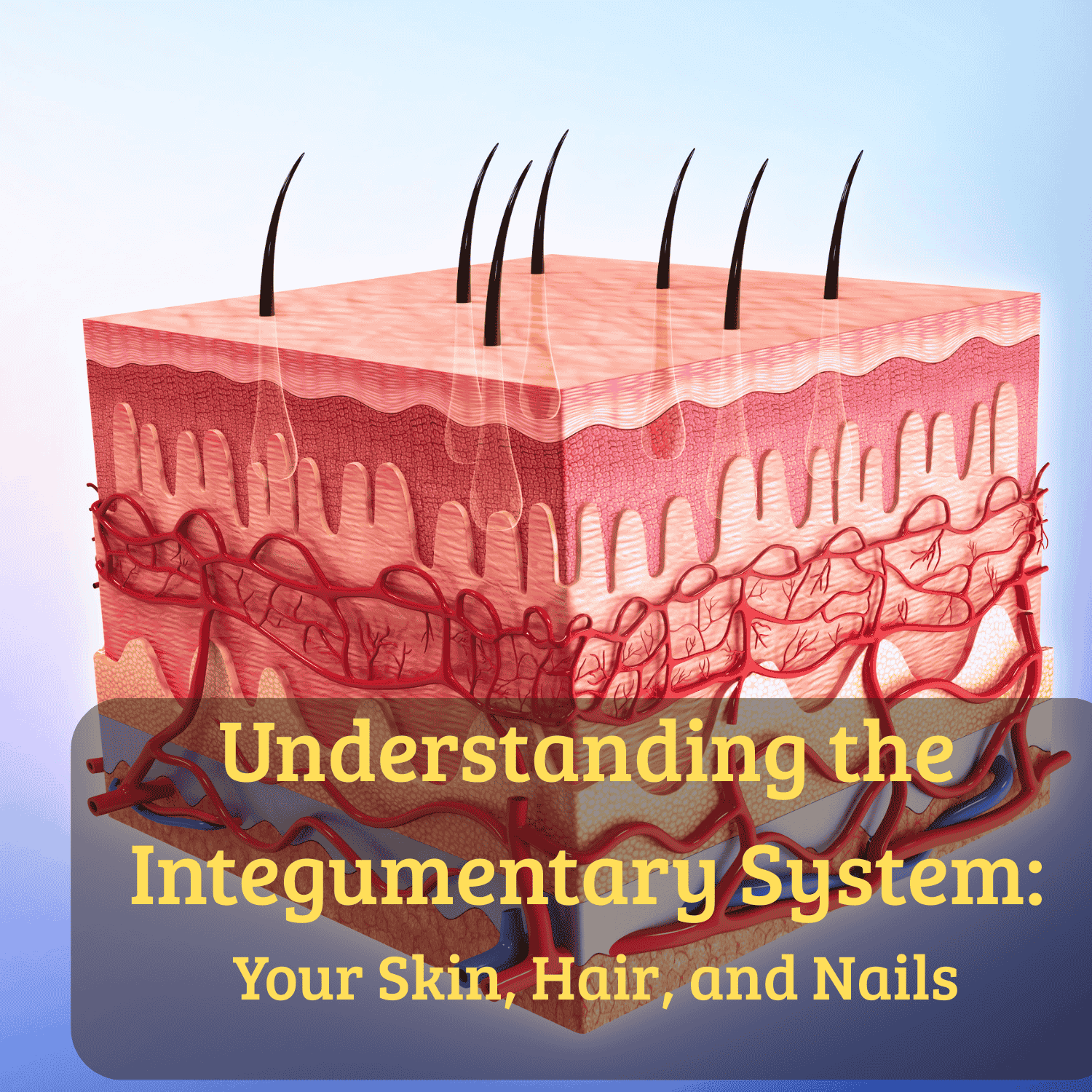
Your skin has three main layers:
- Epidermis: The outer layer you see.
- Dermis: The supportive layer underneath, containing blood vessels and glands.
- Subcutaneous Tissue: A layer of fat that helps regulate temperature.
Hair and nails also play important roles—nails protect your fingertips and provide sensory feedback, while hair helps with temperature and sensation.
What Your Skin and Nails Can Tell You
Your skin and nails can be windows into your overall health:
- Hydration: Press your thumb—if the skin doesn’t bounce back quickly, you may be dehydrated.
- Protein Intake: The “half-moon” at the base of your nails can indicate protein levels.
- Mineral Deficiency: Wavy or lumpy nails may signal low silica or calcium.
- Liver Health: Brown spots (“liver spots”) or jaundice can indicate liver issues.
Common skin issues like dryness, acne, eczema, infections, and wounds often reflect what’s happening inside your body.
Daily Habits for Healthy Skin
- Hydration: Skin is the last place to get water, so drink plenty throughout the day.
- Healthy Fats: Good oils (avocado, nuts, seeds, olive oil) keep skin soft and supple.
- Minerals: Silica, zinc, and vitamin C support skin repair and elasticity.
- Sunlight: Helps the skin produce vitamin D for immune function and bone health.
- Sleep: The skin repairs itself while you rest.
Herbal Support for the Integumentary System
Here are some of our go-to herbal formulas for supporting skin, hair, and nails:
- Blood Wash: Clears toxins, supports oil-producing glands, and helps with acne, eczema, boils, and other skin issues.
- Tonic F / Happy O: Address hormonal imbalances that can contribute to acne (Tonic F for women, Happy O for men).
- Liv Clean: Supports liver health, reducing the toxic load on the skin.
- Tissue Mend: Promotes healing of wounds, sores, bruises, and scars.
- Eraser Oil: Softens hard skin and helps with scars.
- Comfrey Gold Salve: Knits wounds together and supports healing; great for infections and fungal issues.
Tip: For scars or wounds, alternate Eraser Oil and Comfrey Gold Salve, applying with a bandage for best results.
Simple Home Remedies
- Chamomile & Lavender Compress: Brew a tea, soak a cloth, and apply to irritated skin.
- Red Raspberry Leaf Tea: Spray on rashes for soothing relief.
- Tea Honey: A natural way to boost hydration.
Be Mindful of What Touches Your Skin
Choose natural soaps, shampoos, and lotions. Read labels and avoid harsh fragrances or unnecessary additives—what you put on your skin matters as much as what you put in your body.
![[Podcaast] Skin Deep: Herbal Secrets for Radiant Skin & Rapid Repair](http://www.drugfreehelpstore.com/cdn/shop/articles/PODCAST_Integumentary_System.png?v=1764715588&width=1500)
![[Podcast] Beat Nighttime Cramps: The Mineral Fix for Growing Pains & Restless Legs](http://www.drugfreehelpstore.com/cdn/shop/articles/PODCAST_Nighttime_Cramps_6020de8e-e094-4d6f-86b7-645bd6aaba54.jpg?v=1784231929&width=1500)
